
Copa-Cogeca’s Wine Working Party has warned that climate change and extreme weather have caused a “historically low” wine harvest. French production is reportedly down 18 percent, and Italy’s wine output is off 26 percent. However, global grape production is up 40 percent over the past decade, and wine trade is outpacing beer. In the U.S., beer consumption fell 23 percent between 1992 and 2012 as wine consumption climbed by 29 percent, a 226 percent inverse...



 A pika (/ˈpaɪkə, ˈpiːkə/ PY-kə, PEE-kə[3][4]) is a small, mountain-dwelling mammal native to Asia and North America. With short limbs, a very round body, an even coat of fur, and no external tail, they resemble their close relative the rabbit, but with short, rounded ears.[5] The large-eared pi...

 Gloriosa is a genus of 12 species in the plant family Colchicaceae, and includes the formerly recognised genus Littonia. They are native in tropical and southern Africa to Asia, and naturalised in Australia and the Pacific as well as being widely cultivated.[3] The most common English names are...

 Lobelia (/loʊˈbiːliə, lə-/[4][5][6]) is a genus of flowering plants in the family Campanulaceae comprising 415 species,[7] with a subcosmopolitan distribution primarily in tropical to warm temperate regions of the world, a few species extending into cooler temperate regions.[8] They are known g...
 The Alaska marmot (Marmota broweri), also known as the Brooks Range marmot[3] or the Brower's marmot,[4] is a species of rodent in the family Sciuridae. Once considered to be the same species as the hoary marmot, it is now known to be unique. Alaska marmots are found in the scree slopes of the...

From WPI Consulting
Forecasting developments in production agriculture
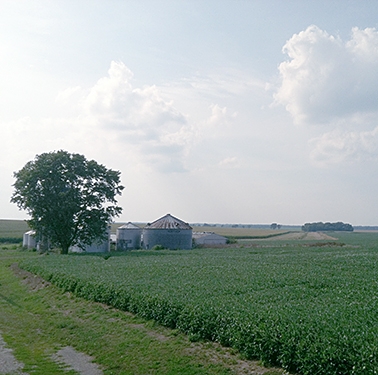
On behalf of a private U.S. agricultural technology provider, WPI’s team generated an econometric model to forecast the movement of concentrated corn production north and west from the traditional U.S. Corn Belt. WPI’s model has subsequently provided quantitative support to a multi-million-dollar investment into short-season corn variety development. WPI’s methodology included a series of interviews with regional grain elevators and seed consultants. Emphasizing outreach and communication with stakeholders who possess intimate sectoral knowledge – on-the-ground insights – is a regular component of WPI’s methodologies, made possible by WPI’s ever-growing network of industry contacts.