

Yesterday’s soy complex market performance had many market watchers wondering what was going on. The clarity of hindsight suggests that the rally resulted from a number of factors combining to bring a rush of buying interest.Soy complex futures prices surged higher yesterday (21 November), catching many traders by surprise. Spot January soybeans were up more than 24 cents, and March soybeans were about 26 cents higher at the close as the soybean market was back to testing strong upside technical resistance levels. Those resistance points were well punctured by midway through the day session this morning, and the soybean market is looking technically strong as of this writing. Monday’s strong rally was not limited to just soybeans as the spo...



 content here...
 Fabiana is a genus of flowering plants in the nightshade family, native to dry slopes in western South America.[1] They are evergreen shrubs or subshrubs,[1] with needle-like leaves and profuse tiny tubular flowers in summer. The common name is false heath because the leaves superficially resem...

 The magpie goose (Anseranas semipalmata) is the sole living representative species of the family Anseranatidae. This waterbird is found in northern Australia and southern New Guinea.[2] The species is not truly migratory but it sometimes travels large distances to find food and water, especiall...
 A pika (/ˈpaɪkə, ˈpiːkə/ PY-kə, PEE-kə[3][4]) is a small, mountain-dwelling mammal native to Asia and North America. With short limbs, a very round body, an even coat of fur, and no external tail, they resemble their close relative the rabbit, but with short, rounded ears.[5] The large-eared pi...

From WPI Consulting
Infrastructure investment due diligence
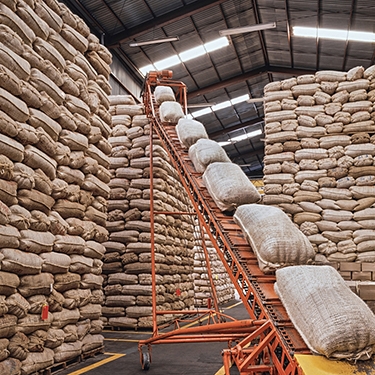
On behalf of a Canadian oilseed processer WPI's team provided market analysis, econometric modeling and financial due diligence in support of a $24 million-dollar investment in a Ukrainian crush plant. Consistent with WPI's findings, local production to supply the plant and the facility's output have expanded exponentially since the investment. WPI has conducted parallel work on behalf of U.S., South American and European clients, both private and public, in the agri-food space.