
India this week blocked a perfunctory motion at the WTO to move surplus WTO funds from 2021 into 2023. All other WTO members agreed that the funds could be used to cover the organization’s “mandatory and unavoidable expenses.” Reportedly, other WTO members characterized India’s obstinance as reflecting abuse of the consensus-based decision making of the organization. India covers just 2.2 percent of the organization’s funding, a paltry $4.4 million, or 0.0007 percent of its $570 billion in world trade benefits. Granted, India is not the only member to “abuse” the consensus requirement. The organization lacks an appellate function because the U.S. continues to block it. And the dispute s...



 A federal appeals court paused a USITC ruling against President Trump’s use of Section 122 to impose 10-percent global tariffs. A bipartisan group of 80 House members asked USTR to investigate specialty crop imports from Mexico for unfair trade practices. India notified the WT...

 The Trump Administration is planning a suspension of tariff rate quotas (TRQs) on beef from all exporters for 200 days as a means to address high beef prices in the U.S. U.S. cattle and beef prices have increased based on exceptionally strong consumer demand, the smallest U.S. cattle herd in 75...

From WPI Consulting
Infrastructure investment due diligence
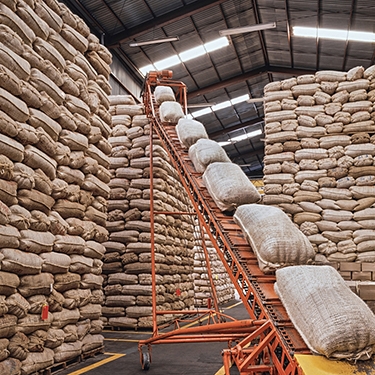
On behalf of a Canadian oilseed processer WPI's team provided market analysis, econometric modeling and financial due diligence in support of a $24 million-dollar investment in a Ukrainian crush plant. Consistent with WPI's findings, local production to supply the plant and the facility's output have expanded exponentially since the investment. WPI has conducted parallel work on behalf of U.S., South American and European clients, both private and public, in the agri-food space.