
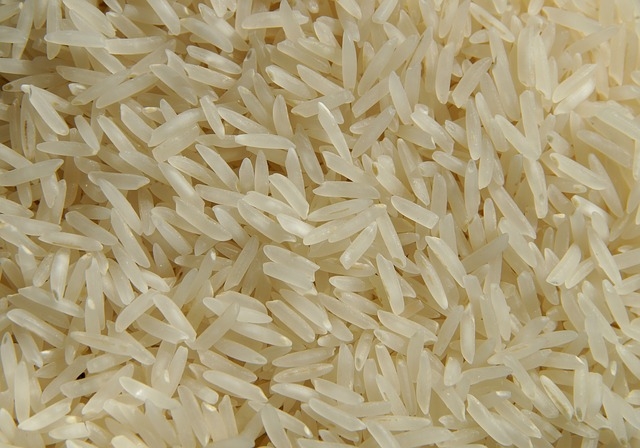
At the behest of the domestic rice industry, U.S. House Ways & Means Committee Chair Jason Smith (R-MO) asked the U.S. International Trade Commission to conduct Section 332 fact-finding investigation of global competitiveness in rice, which the industry claims is skewed by unfair trade practices. A similar investigation back in 2015 led to a report called, “Rice: Global Competitiveness of the U.S. Industry” (Investigation No. 332-549) and led to follow-up actions by the Office of the U.S. Trade Representative. India is the largest rice exporter, supplying nearly a third of the global market and is largely the target of the investigations. Of the top five rice exporting nations, India is the only country that does not...



 A microlith is a small stone tool usually made of flint or chert and typically several centimeters in length and half a centimetre wide. They were made by humans from at least the Upper Paleolithic, across Africa, Europe, Asia and Australia. The microliths were used in spear points and arrowhea...

 The Alaska marmot (Marmota broweri), also known as the Brooks Range marmot[3] or the Brower's marmot,[4] is a species of rodent in the family Sciuridae. Once considered to be the same species as the hoary marmot, it is now known to be unique. Alaska marmots are found in the scree slopes of the...


From WPI Consulting
Accountability and a comprehensive approach to export programming

WPI’s team helped construct a strategic approach to develop, implement, and track promotional activities in 8 key regions across the globe for an agricultural export association. With continued progress measurement and strategic advisory services from WPI, the association has seen its ROI from investments in promotional programming increase by 44 percent over the past 5 years. Not only does this type of holistic approach to organizational strategy provide measurable results to track and analyze, it fosters top-down and bottom-up organizational accountability.