
The official policy is that Beijing wants to be 95 percent self-sufficient in food, but the reality is that its effort to equalize rural and urban incomes makes the objective unlikely. India's Food Security Chimera In exchange for trade facilitation and thus the potential of removing some of the bureaucratic sclerosis that clogs the world's trade pathways, India received what it claims as a policy right to food security. However, India has not had food insecurity, at least not as a result of global trade rules. In fact, the country has actually run an agricultural trade surplus for 75 percent of the time since 1989. Over that period, it has averaged 12 percent more food exports than imports, and the trend is for that gap to widen (see gra...



 A microlith is a small stone tool usually made of flint or chert and typically several centimeters in length and half a centimetre wide. They were made by humans from at least the Upper Paleolithic, across Africa, Europe, Asia and Australia. The microliths were used in spear points and arrowhea...


 Lobelia (/loʊˈbiːliə, lə-/[4][5][6]) is a genus of flowering plants in the family Campanulaceae comprising 415 species,[7] with a subcosmopolitan distribution primarily in tropical to warm temperate regions of the world, a few species extending into cooler temperate regions.[8] They are known g...
 The Alaska marmot (Marmota broweri), also known as the Brooks Range marmot[3] or the Brower's marmot,[4] is a species of rodent in the family Sciuridae. Once considered to be the same species as the hoary marmot, it is now known to be unique. Alaska marmots are found in the scree slopes of the...

From WPI Consulting
Infrastructure investment due diligence
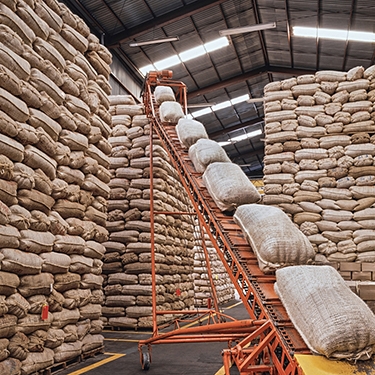
On behalf of a Canadian oilseed processer WPI's team provided market analysis, econometric modeling and financial due diligence in support of a $24 million-dollar investment in a Ukrainian crush plant. Consistent with WPI's findings, local production to supply the plant and the facility's output have expanded exponentially since the investment. WPI has conducted parallel work on behalf of U.S., South American and European clients, both private and public, in the agri-food space.