Trade like NATO U.S. Agricultural Trade Ambassador Gregg Doud says there is a difference between countries willing to make commitments and those actually meeting them. The same is true in NATO defense contributions. European contributions to NATO is a decades-old issue, beginning with force commitments made in Lisbon in 1952. By the 1970s, the U.S. Congress was threatening to reduce American contributions and ultimately required annual Pentagon reports on the matter. Former Defense Secretary Bill Gates reached his pique of disappointment over the matter during the 2011 Libyan crisis when the U.S. had to provide such basics as uniforms to Europe’s troops. The commitment to spending 2 percent of gross domestic product (GDP) on defense...



 content here...

 An Ankylosaurus lumbers along the shore of what’s now eastern Montana. Walking low to the ground, the dino uses its flat, leaf-shaped teeth to tear at ferns lining the water. Suddenly, a shadow looms over the herbivore—a Tyrannosaurus rex is hungry. But Ankylosaurus won’t be a...

 A pika (/ˈpaɪkə, ˈpiːkə/ PY-kə, PEE-kə[3][4]) is a small, mountain-dwelling mammal native to Asia and North America. With short limbs, a very round body, an even coat of fur, and no external tail, they resemble their close relative the rabbit, but with short, rounded ears.[5] The large-eared pi...

From WPI Consulting
Forecasting developments in production agriculture
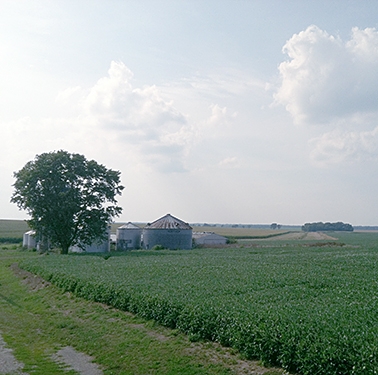
On behalf of a private U.S. agricultural technology provider, WPI’s team generated an econometric model to forecast the movement of concentrated corn production north and west from the traditional U.S. Corn Belt. WPI’s model has subsequently provided quantitative support to a multi-million-dollar investment into short-season corn variety development. WPI’s methodology included a series of interviews with regional grain elevators and seed consultants. Emphasizing outreach and communication with stakeholders who possess intimate sectoral knowledge – on-the-ground insights – is a regular component of WPI’s methodologies, made possible by WPI’s ever-growing network of industry contacts.