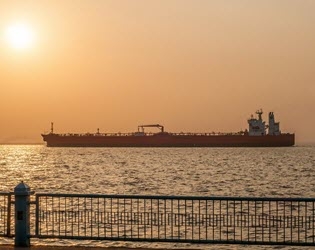
A third of U.S. grain and oilseed exports move through New Orleans and nearly 40 percent if one includes the Texas Gulf ports. Another 15 percent moves out the PNW to Asia. But what happens when the Mississippi dries up? In older literature, USDA’s Agricultural Marketing Service does not even show the Great Lakes ports moving cargo out of the Midwest. But when a conventional egress is blocked, find another route. U.S. wheat exports are about on par with last year, but corn and soybean exports are both off by about a fifth. Thus far this year, U.S. grain exports moving out through the Great Lakes and the St. Lawrence Seaway to the North Atlantic are up 40 percent and potash is up over 260 percent. Some of this moved prior to the...



 A pika (/ˈpaɪkə, ˈpiːkə/ PY-kə, PEE-kə[3][4]) is a small, mountain-dwelling mammal native to Asia and North America. With short limbs, a very round body, an even coat of fur, and no external tail, they resemble their close relative the rabbit, but with short, rounded ears.[5] The large-eared pi...


 Lobelia (/loʊˈbiːliə, lə-/[4][5][6]) is a genus of flowering plants in the family Campanulaceae comprising 415 species,[7] with a subcosmopolitan distribution primarily in tropical to warm temperate regions of the world, a few species extending into cooler temperate regions.[8] They are known g...

From WPI Consulting
Accountability and a comprehensive approach to export programming

WPI’s team helped construct a strategic approach to develop, implement, and track promotional activities in 8 key regions across the globe for an agricultural export association. With continued progress measurement and strategic advisory services from WPI, the association has seen its ROI from investments in promotional programming increase by 44 percent over the past 5 years. Not only does this type of holistic approach to organizational strategy provide measurable results to track and analyze, it fosters top-down and bottom-up organizational accountability.