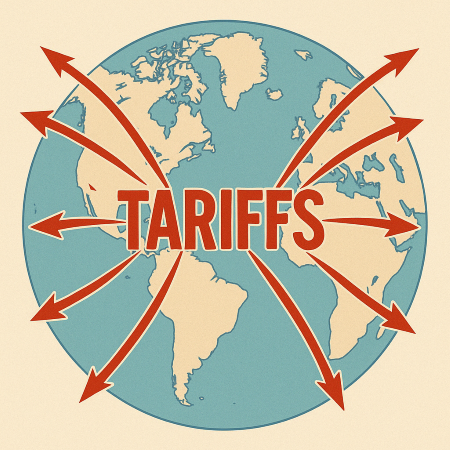
Over the weekend and yesterday, President Trump sent letters to 14 countries proposing new blanket rate tariffs to go into effect on 1 August unless a trade deal is reached. These tariffs would affect all imports beyond key sectoral tariffs already proposed. In the letters, Trump warned countries that they would face even higher tariffs if they retaliated by increasing their own duties. Trump signed an Executive Order determining that certain tariff rates, which were initially set to expire on 9 July – i.e. tomorrow – will now expire on 1 August. Trump took these actions based on information and recommendations from senior officials, including information on the status of trade negotiations. Since he modified the tariff rates ro...



 The magpie goose (Anseranas semipalmata) is the sole living representative species of the family Anseranatidae. This waterbird is found in northern Australia and southern New Guinea.[2] The species is not truly migratory but it sometimes travels large distances to find food and water, especiall...
 A pika (/ˈpaɪkə, ˈpiːkə/ PY-kə, PEE-kə[3][4]) is a small, mountain-dwelling mammal native to Asia and North America. With short limbs, a very round body, an even coat of fur, and no external tail, they resemble their close relative the rabbit, but with short, rounded ears.[5] The large-eared pi...

 Lobelia (/loʊˈbiːliə, lə-/[4][5][6]) is a genus of flowering plants in the family Campanulaceae comprising 415 species,[7] with a subcosmopolitan distribution primarily in tropical to warm temperate regions of the world, a few species extending into cooler temperate regions.[8] They are known g...

From WPI Consulting
Forecasting developments in production agriculture
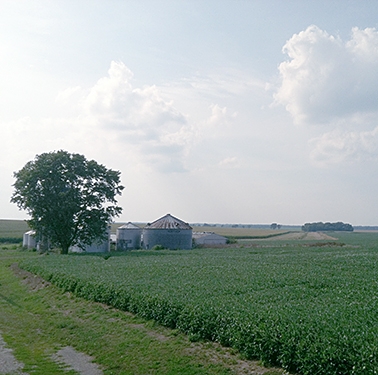
On behalf of a private U.S. agricultural technology provider, WPI’s team generated an econometric model to forecast the movement of concentrated corn production north and west from the traditional U.S. Corn Belt. WPI’s model has subsequently provided quantitative support to a multi-million-dollar investment into short-season corn variety development. WPI’s methodology included a series of interviews with regional grain elevators and seed consultants. Emphasizing outreach and communication with stakeholders who possess intimate sectoral knowledge – on-the-ground insights – is a regular component of WPI’s methodologies, made possible by WPI’s ever-growing network of industry contacts.