


UnCOOL Enough to be Changed: The final country of origin labeling (COOL) rule remains offensive to everyone, including groups supportive of the concept. Meat will have to be labeled in a manner certain to be unpleasant to urban consumers, such as "born and slaughtered in the U.S." There is a reason it is called ground beef and not ground cow. Meanwhile, imported meat will simply be called "product of country x." The language was made horrid enough in order to spark a legal change via the farm bill legislation currently making its way through Congress.Biotech Lessons: Genomics is a disruptive technology, exposing the disadvantages of traditional approaches in the life sciences. Even the European Food Safety Authority (EFSA) is recognizing...


 A microlith is a small stone tool usually made of flint or chert and typically several centimeters in length and half a centimetre wide. They were made by humans from at least the Upper Paleolithic, across Africa, Europe, Asia and Australia. The microliths were used in spear points and arrowhea...
 An Ankylosaurus lumbers along the shore of what’s now eastern Montana. Walking low to the ground, the dino uses its flat, leaf-shaped teeth to tear at ferns lining the water. Suddenly, a shadow looms over the herbivore—a Tyrannosaurus rex is hungry. But Ankylosaurus won’t be a...

 The magpie goose (Anseranas semipalmata) is the sole living representative species of the family Anseranatidae. This waterbird is found in northern Australia and southern New Guinea.[2] The species is not truly migratory but it sometimes travels large distances to find food and water, especiall...
 The common ostrich (Struthio camelus), or simply ostrich, is a species of flightless bird native to certain areas of Africa (and historically, Arabia) and is the largest living species of bird. The common ostrich is one of two extant species of ostriches, the only living members of the genus St...

From WPI Consulting
Infrastructure investment due diligence
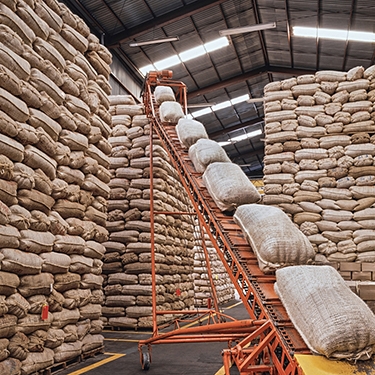
On behalf of a Canadian oilseed processer WPI's team provided market analysis, econometric modeling and financial due diligence in support of a $24 million-dollar investment in a Ukrainian crush plant. Consistent with WPI's findings, local production to supply the plant and the facility's output have expanded exponentially since the investment. WPI has conducted parallel work on behalf of U.S., South American and European clients, both private and public, in the agri-food space.