
While Europe is now abandoning its dairy production quotas, congressional farm bill conferees are flirting with adopting the old EU policy of supply-limiting quotas in order to artificially prop up prices.The third annual debate between the top agricultural economists for the U.S. and EU brought informed discussion amidst the concluding House-Senate negotiations on a new farm bill and ahead of next week's third round of negotiations on the Transatlantic Trade and Investment Partnership (TTIP). CAP Competitiveness There has traditionally been a dichotomy in farm policy approaches across the Atlantic, but now the two economic powers have traded positions. In years past, the U.S. lectured Europe about the importance of market orientation in...



 A microlith is a small stone tool usually made of flint or chert and typically several centimeters in length and half a centimetre wide. They were made by humans from at least the Upper Paleolithic, across Africa, Europe, Asia and Australia. The microliths were used in spear points and arrowhea...


 The magpie goose (Anseranas semipalmata) is the sole living representative species of the family Anseranatidae. This waterbird is found in northern Australia and southern New Guinea.[2] The species is not truly migratory but it sometimes travels large distances to find food and water, especiall...

 Lobelia (/loʊˈbiːliə, lə-/[4][5][6]) is a genus of flowering plants in the family Campanulaceae comprising 415 species,[7] with a subcosmopolitan distribution primarily in tropical to warm temperate regions of the world, a few species extending into cooler temperate regions.[8] They are known g...

From WPI Consulting
Forecasting developments in production agriculture
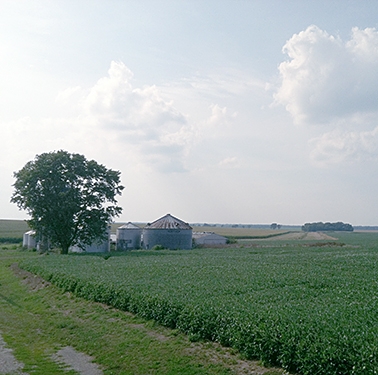
On behalf of a private U.S. agricultural technology provider, WPI’s team generated an econometric model to forecast the movement of concentrated corn production north and west from the traditional U.S. Corn Belt. WPI’s model has subsequently provided quantitative support to a multi-million-dollar investment into short-season corn variety development. WPI’s methodology included a series of interviews with regional grain elevators and seed consultants. Emphasizing outreach and communication with stakeholders who possess intimate sectoral knowledge – on-the-ground insights – is a regular component of WPI’s methodologies, made possible by WPI’s ever-growing network of industry contacts.