

USDA will release its June WASDE (supply and demand) estimates tomorrow (Tuesday). The market is searching for answers about how greatly corn and soybean production will be impacted by the wettest planting season in modern history. Unfortunately, the report will likely not provide much insight for several reasons. - There is no way yet to accurately determine the final planted acreage of either crop. As pointed out in last Friday’s analysis, the surveys for the 28 June acreage update are being completed now, but their numbers might not be conclusive either. - The trade has centered its analytics on trying to guess the weather’s effect on planted acres. However, most have failed to recognize how negative the late planting dates...


 Kiwengwa/Pongwe Forest Reserve Kiwengwa/Pongwe Forest Reserve is located on the northeast coast of Unguja, 20 kilometres (12 mi) from the Town. The reserve is an important biodiversity spot in the coral rag zone. The forest reserve is rich both in faunal and floral species. The faunal species r...
 Fabiana is a genus of flowering plants in the nightshade family, native to dry slopes in western South America.[1] They are evergreen shrubs or subshrubs,[1] with needle-like leaves and profuse tiny tubular flowers in summer. The common name is false heath because the leaves superficially resem...

 A pika (/ˈpaɪkə, ˈpiːkə/ PY-kə, PEE-kə[3][4]) is a small, mountain-dwelling mammal native to Asia and North America. With short limbs, a very round body, an even coat of fur, and no external tail, they resemble their close relative the rabbit, but with short, rounded ears.[5] The large-eared pi...


 Lobelia (/loʊˈbiːliə, lə-/[4][5][6]) is a genus of flowering plants in the family Campanulaceae comprising 415 species,[7] with a subcosmopolitan distribution primarily in tropical to warm temperate regions of the world, a few species extending into cooler temperate regions.[8] They are known g...

From WPI Consulting
Forecasting developments in production agriculture
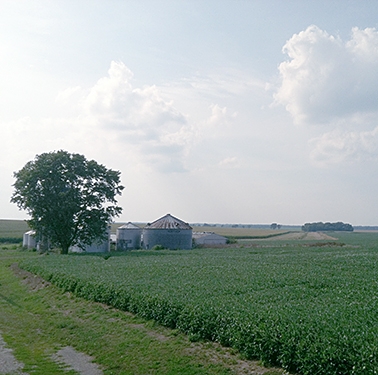
On behalf of a private U.S. agricultural technology provider, WPI’s team generated an econometric model to forecast the movement of concentrated corn production north and west from the traditional U.S. Corn Belt. WPI’s model has subsequently provided quantitative support to a multi-million-dollar investment into short-season corn variety development. WPI’s methodology included a series of interviews with regional grain elevators and seed consultants. Emphasizing outreach and communication with stakeholders who possess intimate sectoral knowledge – on-the-ground insights – is a regular component of WPI’s methodologies, made possible by WPI’s ever-growing network of industry contacts.