
Dry Bulk Dry bulk markets continue to see diverging trends with the Capesize sector suffering under slack demand for iron ore, coal, and bauxite while Panamax and Supramax markets are higher on improved demand from the Atlantic and the East Coast of South America. Pacific markets have been relatively quiet. The Capesize FFA 5TC curve jumped sharply higher this week due to new attacks in the Red Sea and “aggressive” buying. The whole curve rose about $20,000/day, which makes a $4,000/day or more contango. The physical markets, however, have made no such similar rally, which makes arbitrage selling look like a likely very successful strategy. For the Panamax sector, the FFT 4TC curve saw strong buying interest on...



 A pika (/ˈpaɪkə, ˈpiːkə/ PY-kə, PEE-kə[3][4]) is a small, mountain-dwelling mammal native to Asia and North America. With short limbs, a very round body, an even coat of fur, and no external tail, they resemble their close relative the rabbit, but with short, rounded ears.[5] The large-eared pi...


 Lobelia (/loʊˈbiːliə, lə-/[4][5][6]) is a genus of flowering plants in the family Campanulaceae comprising 415 species,[7] with a subcosmopolitan distribution primarily in tropical to warm temperate regions of the world, a few species extending into cooler temperate regions.[8] They are known g...

From WPI Consulting
Forecasting developments in production agriculture
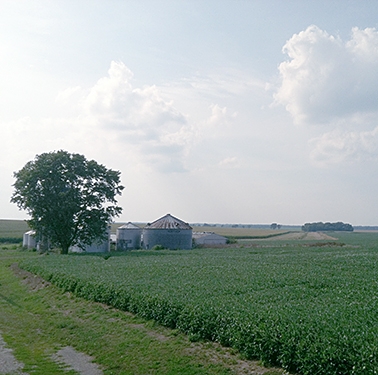
On behalf of a private U.S. agricultural technology provider, WPI’s team generated an econometric model to forecast the movement of concentrated corn production north and west from the traditional U.S. Corn Belt. WPI’s model has subsequently provided quantitative support to a multi-million-dollar investment into short-season corn variety development. WPI’s methodology included a series of interviews with regional grain elevators and seed consultants. Emphasizing outreach and communication with stakeholders who possess intimate sectoral knowledge – on-the-ground insights – is a regular component of WPI’s methodologies, made possible by WPI’s ever-growing network of industry contacts.