

Analysts appear to be in general agreement regarding expectations for the March WASDE. The crop production forecasts for Brazil and Argentina might be more closely examined than the ending supply estimates.USDA's March WASDE will be released tomorrow at 12 pm (EDT). As with the February issue, no significant changes to the numbers are anticipated. This month's more important USDA reports are to be issued 31 March and will include the 2015 planting intentions (acres) estimates as well as the 1 March quarterly stocks numbers. These are the reports that will influence trading as we head into the spring planting and summer growing season. The tables below provide a quick comparison between the February WASDE data and what is expected tomorrow:T...


 Fabiana is a genus of flowering plants in the nightshade family, native to dry slopes in western South America.[1] They are evergreen shrubs or subshrubs,[1] with needle-like leaves and profuse tiny tubular flowers in summer. The common name is false heath because the leaves superficially resem...
 An Ankylosaurus lumbers along the shore of what’s now eastern Montana. Walking low to the ground, the dino uses its flat, leaf-shaped teeth to tear at ferns lining the water. Suddenly, a shadow looms over the herbivore—a Tyrannosaurus rex is hungry. But Ankylosaurus won’t be a...
 testing content here...

 A pika (/ˈpaɪkə, ˈpiːkə/ PY-kə, PEE-kə[3][4]) is a small, mountain-dwelling mammal native to Asia and North America. With short limbs, a very round body, an even coat of fur, and no external tail, they resemble their close relative the rabbit, but with short, rounded ears.[5] The large-eared pi...

From WPI Consulting
Infrastructure investment due diligence
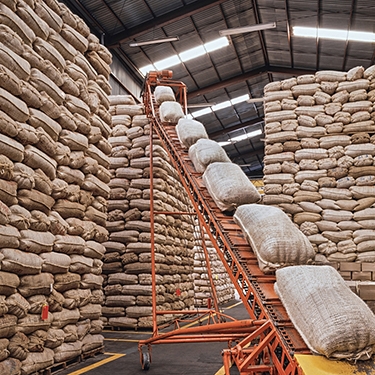
On behalf of a Canadian oilseed processer WPI's team provided market analysis, econometric modeling and financial due diligence in support of a $24 million-dollar investment in a Ukrainian crush plant. Consistent with WPI's findings, local production to supply the plant and the facility's output have expanded exponentially since the investment. WPI has conducted parallel work on behalf of U.S., South American and European clients, both private and public, in the agri-food space.