

Western Canada's producers will have several other issues to deal with as a result of the excessive rains. These could include another low protein spring wheat crop and the potential for some vomitoxin issues both in barley and spring wheat.The Canadian Wheat Board (CWB)-sponsored crop tour across western Canada last week pointed toward a much smaller crop than the enormous record crop of 2013. This wasn't a total surprise to the trade as last year's yields were simply incredible. The table below compares last week's crop tour yield estimates with the actual 2013 results:In addition to the sharply lower spring wheat and canola yield estimates, the tour attempted to determine how much land did not get planted across western Canada because of...


 Kiwengwa/Pongwe Forest Reserve Kiwengwa/Pongwe Forest Reserve is located on the northeast coast of Unguja, 20 kilometres (12 mi) from the Town. The reserve is an important biodiversity spot in the coral rag zone. The forest reserve is rich both in faunal and floral species. The faunal species r...
 An Ankylosaurus lumbers along the shore of what’s now eastern Montana. Walking low to the ground, the dino uses its flat, leaf-shaped teeth to tear at ferns lining the water. Suddenly, a shadow looms over the herbivore—a Tyrannosaurus rex is hungry. But Ankylosaurus won’t be a...
 testing content here...

 A pika (/ˈpaɪkə, ˈpiːkə/ PY-kə, PEE-kə[3][4]) is a small, mountain-dwelling mammal native to Asia and North America. With short limbs, a very round body, an even coat of fur, and no external tail, they resemble their close relative the rabbit, but with short, rounded ears.[5] The large-eared pi...

From WPI Consulting
Infrastructure investment due diligence
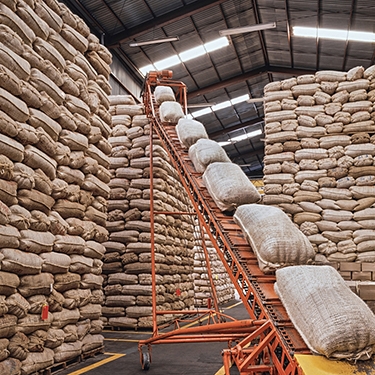
On behalf of a Canadian oilseed processer WPI's team provided market analysis, econometric modeling and financial due diligence in support of a $24 million-dollar investment in a Ukrainian crush plant. Consistent with WPI's findings, local production to supply the plant and the facility's output have expanded exponentially since the investment. WPI has conducted parallel work on behalf of U.S., South American and European clients, both private and public, in the agri-food space.