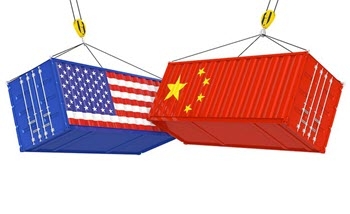
As the two-year China-U.S. Phase One trade agreement nears its final months, and seasonal exports trend up, what China does for the rest of the year has become a hot topic. At a recent event in Kansas City, USDA Secretary Tom Vilsack said the U.S. will press China to meet its targets, stating the U.S. will make “… an effort to make sure China understands that it is our expectation, and it should be their expectation that they live up to the agreements that they made.” Under the agreement China made a commitment to increase its agriculture purchases; the agreement was based on the value (not volume) of exports and was subject to normal market and trade patterns. The total value of imports of ag products from...



 testing content here...

 A pika (/ˈpaɪkə, ˈpiːkə/ PY-kə, PEE-kə[3][4]) is a small, mountain-dwelling mammal native to Asia and North America. With short limbs, a very round body, an even coat of fur, and no external tail, they resemble their close relative the rabbit, but with short, rounded ears.[5] The large-eared pi...


 Lobelia (/loʊˈbiːliə, lə-/[4][5][6]) is a genus of flowering plants in the family Campanulaceae comprising 415 species,[7] with a subcosmopolitan distribution primarily in tropical to warm temperate regions of the world, a few species extending into cooler temperate regions.[8] They are known g...

From WPI Consulting
Accountability and a comprehensive approach to export programming

WPI’s team helped construct a strategic approach to develop, implement, and track promotional activities in 8 key regions across the globe for an agricultural export association. With continued progress measurement and strategic advisory services from WPI, the association has seen its ROI from investments in promotional programming increase by 44 percent over the past 5 years. Not only does this type of holistic approach to organizational strategy provide measurable results to track and analyze, it fosters top-down and bottom-up organizational accountability.