Cold War II In a sign that President Trump is not going to be able to leverage a trade agreement out of China, Beijing issued notice that it will not yield to U.S. demands even with maximum pressure from Washington. This is the strength of a Marxist economy, and it is perhaps helped by a falling value in the yuan. The Soviet Union was able to resist the West for four decades and still maintains its antipathy toward liberalized democracies. Nonetheless, the protests this week in Hong Kong remind that civil liberties are culturally infectious, and perhaps instead of more tariffs, the U.S. should work harder to attract Chinese investment and immigration to highlight its preferable human condition. China will be comforted by Russia and the up...



 testing content here...

 A pika (/ˈpaɪkə, ˈpiːkə/ PY-kə, PEE-kə[3][4]) is a small, mountain-dwelling mammal native to Asia and North America. With short limbs, a very round body, an even coat of fur, and no external tail, they resemble their close relative the rabbit, but with short, rounded ears.[5] The large-eared pi...


 Lobelia (/loʊˈbiːliə, lə-/[4][5][6]) is a genus of flowering plants in the family Campanulaceae comprising 415 species,[7] with a subcosmopolitan distribution primarily in tropical to warm temperate regions of the world, a few species extending into cooler temperate regions.[8] They are known g...

From WPI Consulting
Infrastructure investment due diligence
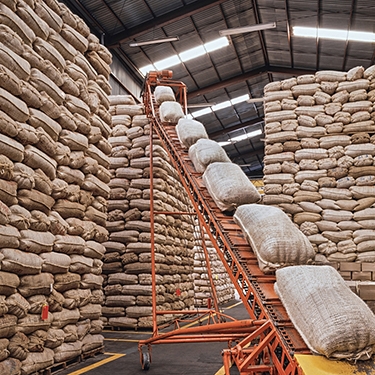
On behalf of a Canadian oilseed processer WPI's team provided market analysis, econometric modeling and financial due diligence in support of a $24 million-dollar investment in a Ukrainian crush plant. Consistent with WPI's findings, local production to supply the plant and the facility's output have expanded exponentially since the investment. WPI has conducted parallel work on behalf of U.S., South American and European clients, both private and public, in the agri-food space.