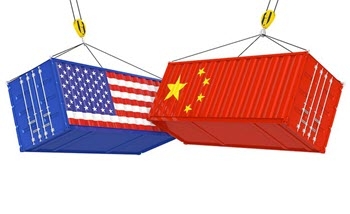
News from inside the trade negotiations with China has generally been positive for about six months. Starting late last year (19 December 2018), the 1 January effective date of the U.S. tariff rate increases on Chinese goods was pushed back to 2 March to facilitate ongoing negotiations. From that time until 6 May, the administration repeatedly said that progress was steady, a deal was in the offing and that the U.S. tariffs imposed on China were working. At this point, that assertion about the effectiveness of tariffs is a highly unprovable proposition. Overall, China stopped importing U.S. goods at a higher rate through 2018 than the U.S. stopped importing Chinese goods. While the first quarter (Q1) 2019 trade deficit with China is way do...



 testing content here...

 A pika (/ˈpaɪkə, ˈpiːkə/ PY-kə, PEE-kə[3][4]) is a small, mountain-dwelling mammal native to Asia and North America. With short limbs, a very round body, an even coat of fur, and no external tail, they resemble their close relative the rabbit, but with short, rounded ears.[5] The large-eared pi...


 Lobelia (/loʊˈbiːliə, lə-/[4][5][6]) is a genus of flowering plants in the family Campanulaceae comprising 415 species,[7] with a subcosmopolitan distribution primarily in tropical to warm temperate regions of the world, a few species extending into cooler temperate regions.[8] They are known g...

From WPI Consulting
Infrastructure investment due diligence
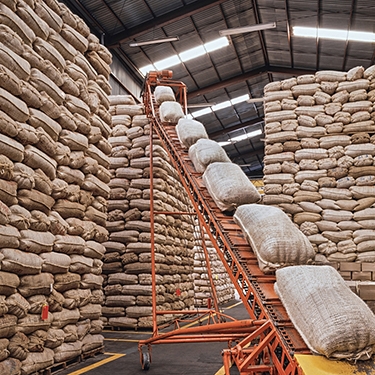
On behalf of a Canadian oilseed processer WPI's team provided market analysis, econometric modeling and financial due diligence in support of a $24 million-dollar investment in a Ukrainian crush plant. Consistent with WPI's findings, local production to supply the plant and the facility's output have expanded exponentially since the investment. WPI has conducted parallel work on behalf of U.S., South American and European clients, both private and public, in the agri-food space.