Ending EU’s Big Ag The French government institution France Stratégie issued a report calling for a complete overhaul of the Common Agricultural Policy (CAP) and not just a tweaking. The proposal calls for compensating farmers for their employment rather than for their agricultural production. It also emphasizes supporting their ecological contributions. While U.S. farm policy was formed in the 1930’s when abundant food surpluses hurt farm income, the CAP was created to solve post WWII food shortages. This proposal comes at a time when major producers are seeking to protect the current system against environmentalists that are demanding a pastoral form of farming. The shift from supporting production to employment and t...



 content here...

 testing content here...

 A pika (/ˈpaɪkə, ˈpiːkə/ PY-kə, PEE-kə[3][4]) is a small, mountain-dwelling mammal native to Asia and North America. With short limbs, a very round body, an even coat of fur, and no external tail, they resemble their close relative the rabbit, but with short, rounded ears.[5] The large-eared pi...

From WPI Consulting
Infrastructure investment due diligence
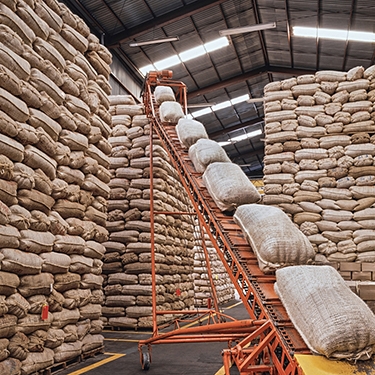
On behalf of a Canadian oilseed processer WPI's team provided market analysis, econometric modeling and financial due diligence in support of a $24 million-dollar investment in a Ukrainian crush plant. Consistent with WPI's findings, local production to supply the plant and the facility's output have expanded exponentially since the investment. WPI has conducted parallel work on behalf of U.S., South American and European clients, both private and public, in the agri-food space.