


Export Sales and Shipments for Dec 30, 2022 – Jan 5, 2023 Wheat: Net sales of 90,800 metric tons (MT) for 2022/2023 were up 93 percent from the previous week, but down 73 percent from the prior 4-week average. Increases primarily for China (66,000 MT, including 65,000 MT switched from unknown destinations), the Philippines (23,200 MT, including decreases of 22,000 MT), Italy (18,900 MT), South Africa (7,700 MT, including 8,000 MT switched from unknown destinations and decreases of 300 MT), and Panama (6,000 MT), were offset by reductions for unknown destinations (43,000 MT) and Thailand (3,600 MT). Total net sales of 1,500 MT for 2023/2024 were for Panama. • Export shipments of 193,600 MT were up noticea...


 Kiwengwa/Pongwe Forest Reserve Kiwengwa/Pongwe Forest Reserve is located on the northeast coast of Unguja, 20 kilometres (12 mi) from the Town. The reserve is an important biodiversity spot in the coral rag zone. The forest reserve is rich both in faunal and floral species. The faunal species r...
 Fabiana is a genus of flowering plants in the nightshade family, native to dry slopes in western South America.[1] They are evergreen shrubs or subshrubs,[1] with needle-like leaves and profuse tiny tubular flowers in summer. The common name is false heath because the leaves superficially resem...
 An Ankylosaurus lumbers along the shore of what’s now eastern Montana. Walking low to the ground, the dino uses its flat, leaf-shaped teeth to tear at ferns lining the water. Suddenly, a shadow looms over the herbivore—a Tyrannosaurus rex is hungry. But Ankylosaurus won’t be a...
 testing content here...

From WPI Consulting
Infrastructure investment due diligence
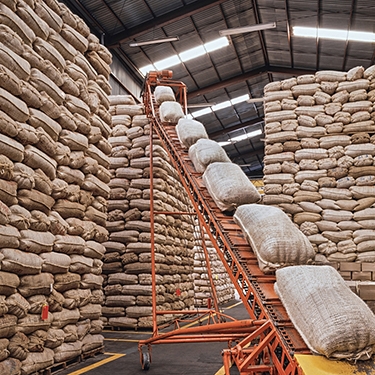
On behalf of a Canadian oilseed processer WPI's team provided market analysis, econometric modeling and financial due diligence in support of a $24 million-dollar investment in a Ukrainian crush plant. Consistent with WPI's findings, local production to supply the plant and the facility's output have expanded exponentially since the investment. WPI has conducted parallel work on behalf of U.S., South American and European clients, both private and public, in the agri-food space.