

The irony is that when non-GMO becomes commoditized, organic product companies like Amy's and Earth's Best that are pushing for GMO labeling will eventually lose their premium in the marketplace. GMO-Nuts Grape-Nuts cereal by Post Foods has become the latest product gaming the non-GMO labeling scheme. Like chicken labeled as produced without growth hormones, marketing a cereal as non-GMO when it only contains wheat and barley is designed to exploit consumer ignorance. Food companies believe that food biotechnology has become sufficiently defamed by the media that the non-GMO label now has sufficient value in the marketplace. Grape-Nuts were novel when introduced in 1897, but manage less than 1 percent market share today. Basically, the pr...


 Kiwengwa/Pongwe Forest Reserve Kiwengwa/Pongwe Forest Reserve is located on the northeast coast of Unguja, 20 kilometres (12 mi) from the Town. The reserve is an important biodiversity spot in the coral rag zone. The forest reserve is rich both in faunal and floral species. The faunal species r...
 An Ankylosaurus lumbers along the shore of what’s now eastern Montana. Walking low to the ground, the dino uses its flat, leaf-shaped teeth to tear at ferns lining the water. Suddenly, a shadow looms over the herbivore—a Tyrannosaurus rex is hungry. But Ankylosaurus won’t be a...
 testing content here...

 Kolkwitzia amabilis /kɒlˈkwɪtsiə əˈmæbɪlɪs/,[2] commonly known as beauty bush, is a species of flowering plant in the family Caprifoliaceae. It is the sole species in genus Kolkwitzia.[1] It is a deciduous shrub grown as an ornamental plant. In China, where it originated, the plant is cal...

From WPI Consulting
Infrastructure investment due diligence
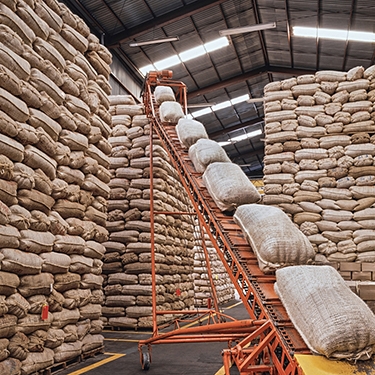
On behalf of a Canadian oilseed processer WPI's team provided market analysis, econometric modeling and financial due diligence in support of a $24 million-dollar investment in a Ukrainian crush plant. Consistent with WPI's findings, local production to supply the plant and the facility's output have expanded exponentially since the investment. WPI has conducted parallel work on behalf of U.S., South American and European clients, both private and public, in the agri-food space.