The Senate is back in session today, and the House returns tomorrow. Congress will deal with unfinished legislative matters, but the administration also has several key issues to settle before the end of CY 2018. Appropriations - The federal government is operating under a short-term funding authorization that expires 7 December. Congress must pass the full FY 2019 appropriations to avoid a partial shutdown, which would include USDA. To date, both the House and Senate have passed five of the 12 regular appropriations bills, but those for USDA and FDA are not among them. As a result, the Defense, Health and Human Services, Labor, Education, and Veterans Affairs Departments are funded through 30 September 2019. The most likely path forward...



 testing content here...

 A pika (/ˈpaɪkə, ˈpiːkə/ PY-kə, PEE-kə[3][4]) is a small, mountain-dwelling mammal native to Asia and North America. With short limbs, a very round body, an even coat of fur, and no external tail, they resemble their close relative the rabbit, but with short, rounded ears.[5] The large-eared pi...


 Lobelia (/loʊˈbiːliə, lə-/[4][5][6]) is a genus of flowering plants in the family Campanulaceae comprising 415 species,[7] with a subcosmopolitan distribution primarily in tropical to warm temperate regions of the world, a few species extending into cooler temperate regions.[8] They are known g...

From WPI Consulting
Forecasting developments in production agriculture
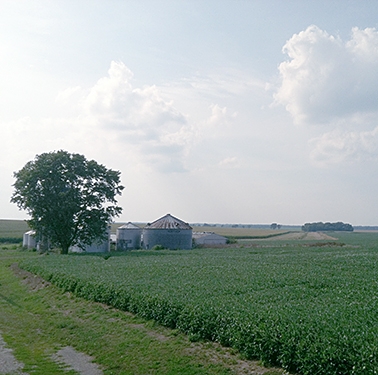
On behalf of a private U.S. agricultural technology provider, WPI’s team generated an econometric model to forecast the movement of concentrated corn production north and west from the traditional U.S. Corn Belt. WPI’s model has subsequently provided quantitative support to a multi-million-dollar investment into short-season corn variety development. WPI’s methodology included a series of interviews with regional grain elevators and seed consultants. Emphasizing outreach and communication with stakeholders who possess intimate sectoral knowledge – on-the-ground insights – is a regular component of WPI’s methodologies, made possible by WPI’s ever-growing network of industry contacts.