


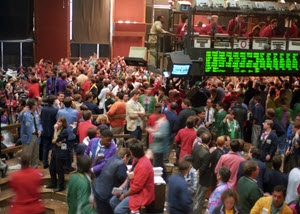
The breaking off of U.S.-Chinese talks late last week led to what appeared to be market exhaustion overnight and early Monday morning as new contract lows were set. But in a reversal, prices pulled themselves up and well above those lows by Monday’s close. That technical signal and USDA’s report late yesterday afternoon, which showed the U.S. pace of U.S. spring planting was slower than expected and far behind average, sent a heretofore tired bearish market off and running. Grain and soy prices gapped higher to open last night’s trade, and they stayed sharply higher overnight and throughout today’s trade. Soybean futures contracts were up nearly 36 cents at their session high, and they retained most of that gain by...


 Kiwengwa/Pongwe Forest Reserve Kiwengwa/Pongwe Forest Reserve is located on the northeast coast of Unguja, 20 kilometres (12 mi) from the Town. The reserve is an important biodiversity spot in the coral rag zone. The forest reserve is rich both in faunal and floral species. The faunal species r...


 content here...
 Fabiana is a genus of flowering plants in the nightshade family, native to dry slopes in western South America.[1] They are evergreen shrubs or subshrubs,[1] with needle-like leaves and profuse tiny tubular flowers in summer. The common name is false heath because the leaves superficially resem...

From WPI Consulting
Accountability and a comprehensive approach to export programming

WPI’s team helped construct a strategic approach to develop, implement, and track promotional activities in 8 key regions across the globe for an agricultural export association. With continued progress measurement and strategic advisory services from WPI, the association has seen its ROI from investments in promotional programming increase by 44 percent over the past 5 years. Not only does this type of holistic approach to organizational strategy provide measurable results to track and analyze, it fosters top-down and bottom-up organizational accountability.