


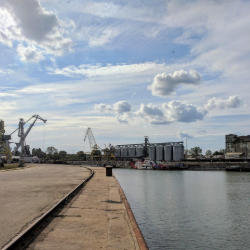
The primary drivers of Monday’s grain trade were, of course, the U.S. and Israel’s weekend attacks on Iran that killed the latter country’s Supreme Leader Khamenei and the subsequent cascade of impacts on global markets. WPI covers these impacts in more detail in our nearby article, but here we briefly note that energy markets rallied sharply on the threat to global crude oil and LNG supplies, and freight markets are avoiding the Persian Gulf and, more broadly, the Middle East. The weekend events don’t have much impact on global grain trade other than increasing the difficulty of supplying some importers with human and animal feed needs, but routing vessels around the Suez Canal and Red Sea (again) will tighten dry-b...



 ZanzibarMnemba Marine Park Mnemba Marine Park is located 10 kilometres (6 mi) from Stone Town and forms part of the northeastern Unguja Island. A marine reserve and atoll, its shallow stretch of coral reef is in the shape of an oval. It is located between Matemwe and Nungwi, which is an importa...
 Kiwengwa/Pongwe Forest Reserve Kiwengwa/Pongwe Forest Reserve is located on the northeast coast of Unguja, 20 kilometres (12 mi) from the Town. The reserve is an important biodiversity spot in the coral rag zone. The forest reserve is rich both in faunal and floral species. The faunal species r...

From WPI Consulting
Forecasting developments in production agriculture
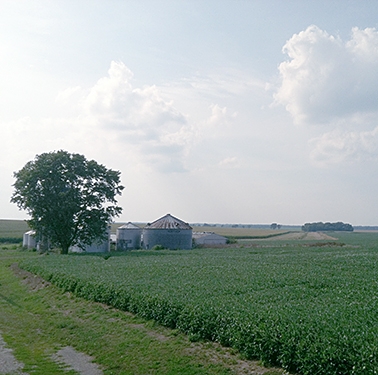
On behalf of a private U.S. agricultural technology provider, WPI’s team generated an econometric model to forecast the movement of concentrated corn production north and west from the traditional U.S. Corn Belt. WPI’s model has subsequently provided quantitative support to a multi-million-dollar investment into short-season corn variety development. WPI’s methodology included a series of interviews with regional grain elevators and seed consultants. Emphasizing outreach and communication with stakeholders who possess intimate sectoral knowledge – on-the-ground insights – is a regular component of WPI’s methodologies, made possible by WPI’s ever-growing network of industry contacts.