


Long’s rush to the exit in CBOT futures continued Friday with the USDA’s Ag Outlook Forum (AOF) balance sheet projections weighing heavily on markets. March corn futures posted a new contract low in the first five minutes of the overnight trade on Friday and continued to post new lows throughout the day. Wheat followed suite and scored new contract lows with weakness growing in the Paris and three American futures markets. Soybeans managed to climb higher for the day, though the gains were a reaction to oversold conditions and will likely amount to no more than a dead cat bounce. Bearish outlooks and continued weakness were the themes for this week’s trade and the commodity market music doesn’t appear ready to change...



 The magpie goose (Anseranas semipalmata) is the sole living representative species of the family Anseranatidae. This waterbird is found in northern Australia and southern New Guinea.[2] The species is not truly migratory but it sometimes travels large distances to find food and water, especiall...
 The common ostrich (Struthio camelus), or simply ostrich, is a species of flightless bird native to certain areas of Africa (and historically, Arabia) and is the largest living species of bird. The common ostrich is one of two extant species of ostriches, the only living members of the genus St...
 testing content here...
 A pika (/ˈpaɪkə, ˈpiːkə/ PY-kə, PEE-kə[3][4]) is a small, mountain-dwelling mammal native to Asia and North America. With short limbs, a very round body, an even coat of fur, and no external tail, they resemble their close relative the rabbit, but with short, rounded ears.[5] The large-eared pi...

From WPI Consulting
Infrastructure investment due diligence
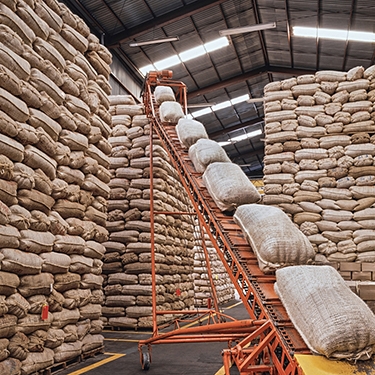
On behalf of a Canadian oilseed processer WPI's team provided market analysis, econometric modeling and financial due diligence in support of a $24 million-dollar investment in a Ukrainian crush plant. Consistent with WPI's findings, local production to supply the plant and the facility's output have expanded exponentially since the investment. WPI has conducted parallel work on behalf of U.S., South American and European clients, both private and public, in the agri-food space.