
Markets Not Government A common refrain from U.S. agriculture groups is that they prefer to get their income from the market than the government. Most of their income is derived from the market but it looks more romantic than real when one considers that government supplements determine the breakeven for many row crop farmers. With global markets in turmoil under Trump trade policy, clinging to government bailouts is the only practical result. Senate agriculture leaders are proposing yet more bailout money for farmers via a “bridge” until later this year when higher reference prices and expanded crop insurance access take effect. Idealizing a free trade world and living in one are two very different concepts. Fueling and B...



 content here...

 testing content here...

 A pika (/ˈpaɪkə, ˈpiːkə/ PY-kə, PEE-kə[3][4]) is a small, mountain-dwelling mammal native to Asia and North America. With short limbs, a very round body, an even coat of fur, and no external tail, they resemble their close relative the rabbit, but with short, rounded ears.[5] The large-eared pi...

From WPI Consulting
Infrastructure investment due diligence
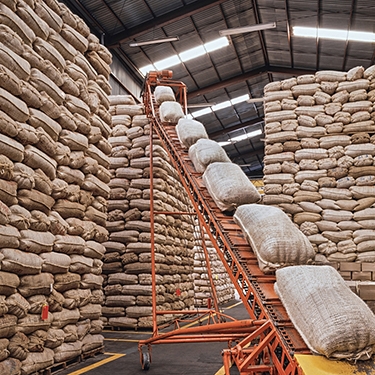
On behalf of a Canadian oilseed processer WPI's team provided market analysis, econometric modeling and financial due diligence in support of a $24 million-dollar investment in a Ukrainian crush plant. Consistent with WPI's findings, local production to supply the plant and the facility's output have expanded exponentially since the investment. WPI has conducted parallel work on behalf of U.S., South American and European clients, both private and public, in the agri-food space.