
More information is now available regarding China’s new foreign material (FM) standard for soybean imports from the U.S. (see Ag Perspectives, 22 December) as well as its implications. It is first important to note that China’s inspections agency (AQSIQ) and USDA’s Animal and Plant Health Inspection Service (APHIS) agreed to this change, set to go into effect on 1 January 2018. AQSIQ had apparently been complaining to APHIS since September about the high level of weed seed contamination in the U.S. soybean shipments. After discussions in early December, APHIS agreed to include notification on the phytosanitary certificate for shipments that contain more than 1 percent FM. In return, AQSIQ will allow shipments with 1 perce...


 Fabiana is a genus of flowering plants in the nightshade family, native to dry slopes in western South America.[1] They are evergreen shrubs or subshrubs,[1] with needle-like leaves and profuse tiny tubular flowers in summer. The common name is false heath because the leaves superficially resem...

 testing content here...

 A pika (/ˈpaɪkə, ˈpiːkə/ PY-kə, PEE-kə[3][4]) is a small, mountain-dwelling mammal native to Asia and North America. With short limbs, a very round body, an even coat of fur, and no external tail, they resemble their close relative the rabbit, but with short, rounded ears.[5] The large-eared pi...

From WPI Consulting
Forecasting developments in production agriculture
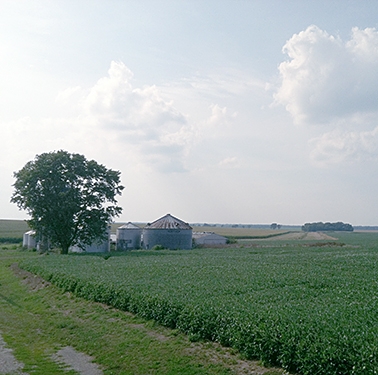
On behalf of a private U.S. agricultural technology provider, WPI’s team generated an econometric model to forecast the movement of concentrated corn production north and west from the traditional U.S. Corn Belt. WPI’s model has subsequently provided quantitative support to a multi-million-dollar investment into short-season corn variety development. WPI’s methodology included a series of interviews with regional grain elevators and seed consultants. Emphasizing outreach and communication with stakeholders who possess intimate sectoral knowledge – on-the-ground insights – is a regular component of WPI’s methodologies, made possible by WPI’s ever-growing network of industry contacts.