

The outlook for U.S. soybeans has undergone a quick and remarkable change over the past three months after being decidedly bearish in February and early March. U.S. Hard Red Winter Wheat Crop The U.S. is harvesting a big hard red winter wheat crop, which USDA acknowledged last Friday by boosting production 6 percent from the May estimate. As we’ve suspected since the rains started falling across that region in April, though, the problem is that the protein content will be very low. It is well under 10 percent in some areas, and much of Oklahoma’s crop will likely be below 10.5 percent. Meanwhile, domestic mills typically want 10.8 percent or higher. The 2015 hard red winter wheat crop was not very desirable from a milling perspective, so...


 Fabiana is a genus of flowering plants in the nightshade family, native to dry slopes in western South America.[1] They are evergreen shrubs or subshrubs,[1] with needle-like leaves and profuse tiny tubular flowers in summer. The common name is false heath because the leaves superficially resem...
 An Ankylosaurus lumbers along the shore of what’s now eastern Montana. Walking low to the ground, the dino uses its flat, leaf-shaped teeth to tear at ferns lining the water. Suddenly, a shadow looms over the herbivore—a Tyrannosaurus rex is hungry. But Ankylosaurus won’t be a...
 testing content here...

 A pika (/ˈpaɪkə, ˈpiːkə/ PY-kə, PEE-kə[3][4]) is a small, mountain-dwelling mammal native to Asia and North America. With short limbs, a very round body, an even coat of fur, and no external tail, they resemble their close relative the rabbit, but with short, rounded ears.[5] The large-eared pi...

From WPI Consulting
Infrastructure investment due diligence
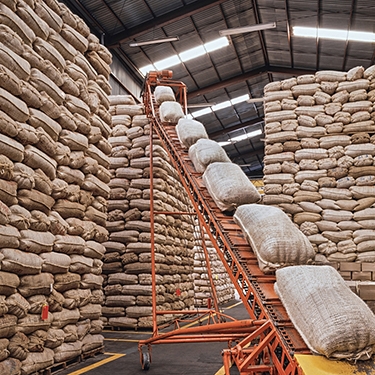
On behalf of a Canadian oilseed processer WPI's team provided market analysis, econometric modeling and financial due diligence in support of a $24 million-dollar investment in a Ukrainian crush plant. Consistent with WPI's findings, local production to supply the plant and the facility's output have expanded exponentially since the investment. WPI has conducted parallel work on behalf of U.S., South American and European clients, both private and public, in the agri-food space.