Exports have accounted for 25 percent of U.S. farm income, but that share will continue to fall. While China has taken about 25 percent of U.S. agricultural exports, the trade war is about to intensify. This will mean both further near-term losses but also a long-term erosion. Sales to Europe have been declining, and Japan will buy more from Australia and New Zealand due to the Trans-Pacific Partnership (TPP). The OECD issued a silly report that American consumers will be worst hit due to the trade conflict with China. Duh. That is the whole point of it – the U.S. has lower importer barriers and consumes more from China. The real question is, what should be the revised direction of U.S. industries such as agriculture? Technology has...



 content here...

 testing content here...

 A pika (/ˈpaɪkə, ˈpiːkə/ PY-kə, PEE-kə[3][4]) is a small, mountain-dwelling mammal native to Asia and North America. With short limbs, a very round body, an even coat of fur, and no external tail, they resemble their close relative the rabbit, but with short, rounded ears.[5] The large-eared pi...

From WPI Consulting
Infrastructure investment due diligence
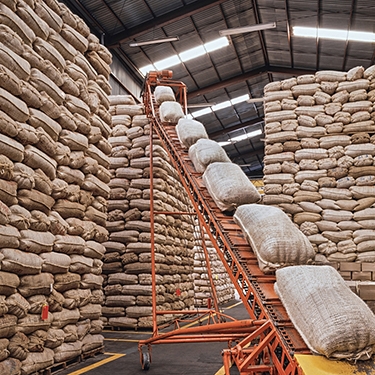
On behalf of a Canadian oilseed processer WPI's team provided market analysis, econometric modeling and financial due diligence in support of a $24 million-dollar investment in a Ukrainian crush plant. Consistent with WPI's findings, local production to supply the plant and the facility's output have expanded exponentially since the investment. WPI has conducted parallel work on behalf of U.S., South American and European clients, both private and public, in the agri-food space.