
Drought Continues in Parts of Argentina Relatively little rainfall was received this past weekend over Argentina’s soybean and corn growing areas, especially where it is most needed in the provinces of Buenos Aires and La Pampa. In some southwestern parts of Buenos Aires Province, the rains were necessary to proceed with the soybean planting, which still had 18 percent of the intended area to be completed as of late last week. The outlook for the next week to 10 days calls for continued dryness across the country’s key soybean-growing areas, and temperatures may reach 100°F later this week. The yield potential has already been reduced in some areas, and further damage will occur if substantial rainfall is not received soon...


 Fabiana is a genus of flowering plants in the nightshade family, native to dry slopes in western South America.[1] They are evergreen shrubs or subshrubs,[1] with needle-like leaves and profuse tiny tubular flowers in summer. The common name is false heath because the leaves superficially resem...

 testing content here...

 A pika (/ˈpaɪkə, ˈpiːkə/ PY-kə, PEE-kə[3][4]) is a small, mountain-dwelling mammal native to Asia and North America. With short limbs, a very round body, an even coat of fur, and no external tail, they resemble their close relative the rabbit, but with short, rounded ears.[5] The large-eared pi...

From WPI Consulting
Forecasting developments in production agriculture
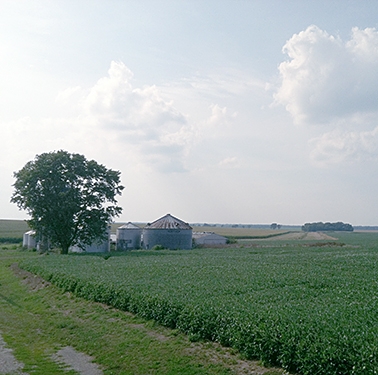
On behalf of a private U.S. agricultural technology provider, WPI’s team generated an econometric model to forecast the movement of concentrated corn production north and west from the traditional U.S. Corn Belt. WPI’s model has subsequently provided quantitative support to a multi-million-dollar investment into short-season corn variety development. WPI’s methodology included a series of interviews with regional grain elevators and seed consultants. Emphasizing outreach and communication with stakeholders who possess intimate sectoral knowledge – on-the-ground insights – is a regular component of WPI’s methodologies, made possible by WPI’s ever-growing network of industry contacts.