
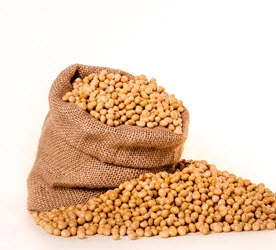
Higher Soybean Inspections Last Week but Not Many for China Yesterday’s USDA export inspections report indicated 1,085,251 MT of soybeans were inspected in the week ending 10 January. That was up 59 percent from 682,029 MT the previous week but down from 1,244,979 MT in the same week of 2018. A total 18,393,415 MT have been inspected thus far in the current marketing year versus 30,853,731 MT a year ago. It is notable that only 68,053 MT of soybeans destined to China were inspected last week, all from the U.S. Gulf. China has apparently bought about 5 MMT from the U.S. since the beginning of December, but only 160,513 MT have been inspected. Assuming these purchases were for shipment prior to the end of the U.S.-China truce in March...


 Fabiana is a genus of flowering plants in the nightshade family, native to dry slopes in western South America.[1] They are evergreen shrubs or subshrubs,[1] with needle-like leaves and profuse tiny tubular flowers in summer. The common name is false heath because the leaves superficially resem...

 testing content here...

 A pika (/ˈpaɪkə, ˈpiːkə/ PY-kə, PEE-kə[3][4]) is a small, mountain-dwelling mammal native to Asia and North America. With short limbs, a very round body, an even coat of fur, and no external tail, they resemble their close relative the rabbit, but with short, rounded ears.[5] The large-eared pi...

From WPI Consulting
Weighing in on strategic realignment

WPI’s team was retained by the governing board of a U.S. industry organization to review a decision, reached by vote, to invest significant assets into the development and management of an export trading company. WPI’s team conducted a formal review of this decision and concluded that the current level of market saturation would limit the benefits of the investment. Based on WPI’s analysis and recommended actions, the board subsequently reversed its decision and undertook a strategic planning effort to identify more impactful investments. On behalf of numerous clients, WPI has not only assisted in identifying strategic paths but also advised their implementation.