Origin Labeling Loser The U.S. beef industry feels embattled. After years of contending with health risk warnings about its product, marketers of plant proteins are now labeling their own products as “clean meat,” implying the same product at its base but qualitatively better. Protein demand is increasing, but competitor chicken maintains its price edge and now ventures into processing claims and even traceability. The inefficient parts of the cattle industry are desperate and sought to have the Colorado legislature impose a country-of-origin labeling requirement on a state level. Proponents of labeling argue that consumers are being deceived, but the proposal was rejected on technical grounds. Both proponents and opponents of...



 content here...

 testing content here...

 A pika (/ˈpaɪkə, ˈpiːkə/ PY-kə, PEE-kə[3][4]) is a small, mountain-dwelling mammal native to Asia and North America. With short limbs, a very round body, an even coat of fur, and no external tail, they resemble their close relative the rabbit, but with short, rounded ears.[5] The large-eared pi...

From WPI Consulting
Forecasting developments in production agriculture
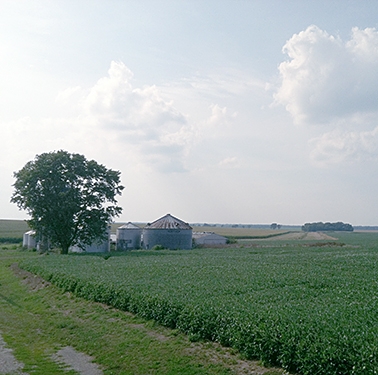
On behalf of a private U.S. agricultural technology provider, WPI’s team generated an econometric model to forecast the movement of concentrated corn production north and west from the traditional U.S. Corn Belt. WPI’s model has subsequently provided quantitative support to a multi-million-dollar investment into short-season corn variety development. WPI’s methodology included a series of interviews with regional grain elevators and seed consultants. Emphasizing outreach and communication with stakeholders who possess intimate sectoral knowledge – on-the-ground insights – is a regular component of WPI’s methodologies, made possible by WPI’s ever-growing network of industry contacts.