
Phase One Collateral Damage UC-Davis researchers Robert Feenstra and Chang Hong analyzed (NBER Working Paper No. 27383) the impact of the Phase One agreement on China’s agricultural imports and find that some U.S. allies should be very upset. Holding China’s imports roughly static, the additional sales from the U.S. required under the agreement will be export losses by competing suppliers. Because U.S. agricultural exports to China were actually declining in the years preceding the agreement, the authors calculate that China would have to apply an import subsidy to Americans the equivalent of 42 percent in year one and 59 percent in year two. Looking specifically at China’s imports and their suppliers, the countries most...



 content here...

 testing content here...

 A pika (/ˈpaɪkə, ˈpiːkə/ PY-kə, PEE-kə[3][4]) is a small, mountain-dwelling mammal native to Asia and North America. With short limbs, a very round body, an even coat of fur, and no external tail, they resemble their close relative the rabbit, but with short, rounded ears.[5] The large-eared pi...

From WPI Consulting
Forecasting developments in production agriculture
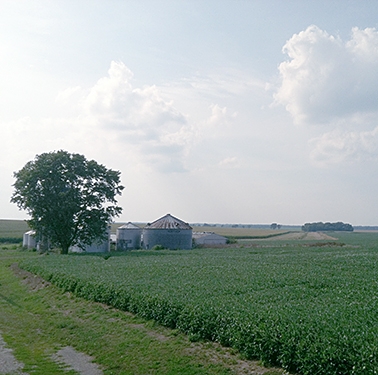
On behalf of a private U.S. agricultural technology provider, WPI’s team generated an econometric model to forecast the movement of concentrated corn production north and west from the traditional U.S. Corn Belt. WPI’s model has subsequently provided quantitative support to a multi-million-dollar investment into short-season corn variety development. WPI’s methodology included a series of interviews with regional grain elevators and seed consultants. Emphasizing outreach and communication with stakeholders who possess intimate sectoral knowledge – on-the-ground insights – is a regular component of WPI’s methodologies, made possible by WPI’s ever-growing network of industry contacts.