
Fuzzy Math Among President Trump’s various assertions in last night’s State of the Union address was that tariffs would someday replace the income tax, but that is a mathematical impossibility. The value of imported goods is around $3 trillion, and the income tax generates nearly $5 trillion. Applying the necessary 166 percent tariff would inherently reduce imports and thus cause a shortfall in government revenue. Tariffs rose 186 percent in 2025, and the resulting revenues increased from $170 billion to about $270 billion, but imports fell from the country where tariffs were applied most heavily—China. And the tariff rate applied to China was 23 percent. It would require a 165 percent tariff on $3 trillion worth of import...



 testing content here...

 A pika (/ˈpaɪkə, ˈpiːkə/ PY-kə, PEE-kə[3][4]) is a small, mountain-dwelling mammal native to Asia and North America. With short limbs, a very round body, an even coat of fur, and no external tail, they resemble their close relative the rabbit, but with short, rounded ears.[5] The large-eared pi...


 Lobelia (/loʊˈbiːliə, lə-/[4][5][6]) is a genus of flowering plants in the family Campanulaceae comprising 415 species,[7] with a subcosmopolitan distribution primarily in tropical to warm temperate regions of the world, a few species extending into cooler temperate regions.[8] They are known g...

From WPI Consulting
Infrastructure investment due diligence
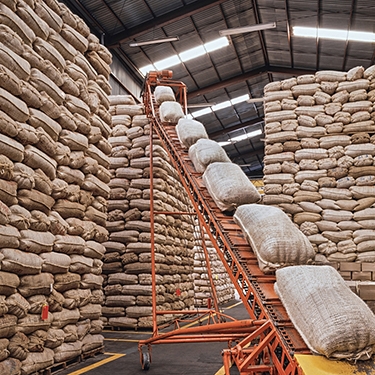
On behalf of a Canadian oilseed processer WPI's team provided market analysis, econometric modeling and financial due diligence in support of a $24 million-dollar investment in a Ukrainian crush plant. Consistent with WPI's findings, local production to supply the plant and the facility's output have expanded exponentially since the investment. WPI has conducted parallel work on behalf of U.S., South American and European clients, both private and public, in the agri-food space.