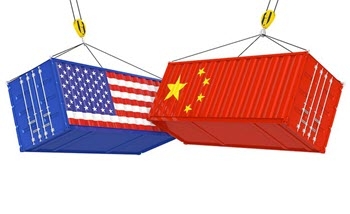
Critics of the trade deal signed today between the U.S. and China lament President Trump’s policy tilt toward “managed trade.” Trump Administration officials resigned themselves that if they could not compel China (and other countries) into greater market orientation, they would join them, insisting on carveouts for American industries like agriculture. Ironically, Chinese Vice Premier Liu He insisted that China’s agricultural purchases would be driven by demand, rising if demand is there to support it. The question is whether global trade is “managed,” how and to what degree? It is a difficult measurement. For example, Joshua Yaffa in his book on the evolution of Russia’s modern governance asserts...



 content here...

 The magpie goose (Anseranas semipalmata) is the sole living representative species of the family Anseranatidae. This waterbird is found in northern Australia and southern New Guinea.[2] The species is not truly migratory but it sometimes travels large distances to find food and water, especiall...

 testing content here...

From WPI Consulting
Illuminating the value of technical research

On behalf of a commodity producer organization, WPI evaluated the outputs from a project that featured a $5 million investment into technical research over multiple years. WPI’s team captured the results of this extensive effort and synthesized them for presentation to the organization’s governing board; among the findings uncovered and presented for the first time was the development of genomic traits proven, via rigorous testing, to provide crop yield advantages of 50 percent or more to U.S. farmers in times of drought. Capturing measurable results from long-term efforts can be challenging. Educating clients on the dynamics of success measurement when quantifiable results are not readily available requires deep client-consultant collaboration and an ability to consider both near- and long-term client aspirations with market/policy dynamics – attributes that WPI brings to every consulting engagement.