
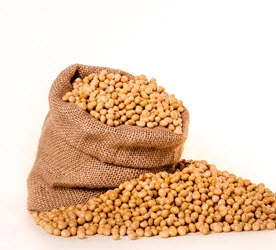
The probability is increasing for soybean prices to establish a long-term low during early 2019. End-users are encouraged to utilize any such price decline into new contract lows to extend hedges. The following analysis highlights reasons for a near-term sell-off in soybean and why the current full-carry pricing structure is no justification to continue hand-to-mouth procurement. U.S. trade negotiators seem hopeful that the Chinese will soon accept U.S. trade terms, a fact which would ideally result in added U.S. soybean purchases, or perhaps even stimulate Chinese buying that exceeds prior consumption patterns. That optimistic expectation seems common among American grain market participants. However, traders and politicians (inclu...


 Fabiana is a genus of flowering plants in the nightshade family, native to dry slopes in western South America.[1] They are evergreen shrubs or subshrubs,[1] with needle-like leaves and profuse tiny tubular flowers in summer. The common name is false heath because the leaves superficially resem...

 testing content here...

 A pika (/ˈpaɪkə, ˈpiːkə/ PY-kə, PEE-kə[3][4]) is a small, mountain-dwelling mammal native to Asia and North America. With short limbs, a very round body, an even coat of fur, and no external tail, they resemble their close relative the rabbit, but with short, rounded ears.[5] The large-eared pi...

From WPI Consulting
Forecasting developments in production agriculture
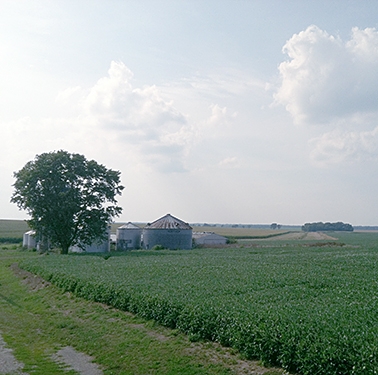
On behalf of a private U.S. agricultural technology provider, WPI’s team generated an econometric model to forecast the movement of concentrated corn production north and west from the traditional U.S. Corn Belt. WPI’s model has subsequently provided quantitative support to a multi-million-dollar investment into short-season corn variety development. WPI’s methodology included a series of interviews with regional grain elevators and seed consultants. Emphasizing outreach and communication with stakeholders who possess intimate sectoral knowledge – on-the-ground insights – is a regular component of WPI’s methodologies, made possible by WPI’s ever-growing network of industry contacts.