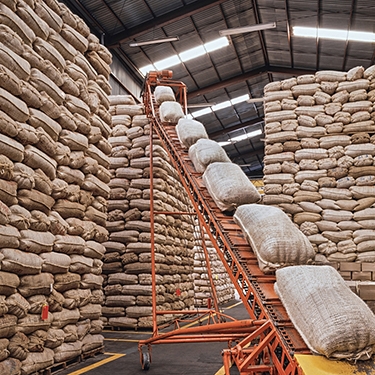
Annual crop quality tours took place across Kansas and Oklahoma this week. In the final analysis, production estimates came in well below the pre-tour expectations. It is much more difficult to gauge yields this year for a number of reasons.
Last fall's drought resulted in poor emergence and very poor stands across a wide area. The western reach of the hard red winter wheat region remains very dry. The cool (maybe cold) spring has roughly 50 percent of the crop three to four weeks behind normal development. Several frost/freeze episodes this spring caused a great deal of damage, but no one is certain what the full extent of that damage is yet. It was cold enough again last night for wheat in the boot to heading stages. An interestin...


 An Ankylosaurus lumbers along the shore of what’s now eastern Montana. Walking low to the ground, the dino uses its flat, leaf-shaped teeth to tear at ferns lining the water. Suddenly, a shadow looms over the herbivore—a Tyrannosaurus rex is hungry. But Ankylosaurus won’t be a...
 testing content here...

 A pika (/ˈpaɪkə, ˈpiːkə/ PY-kə, PEE-kə[3][4]) is a small, mountain-dwelling mammal native to Asia and North America. With short limbs, a very round body, an even coat of fur, and no external tail, they resemble their close relative the rabbit, but with short, rounded ears.[5] The large-eared pi...

 Kolkwitzia amabilis /kɒlˈkwɪtsiə əˈmæbɪlɪs/,[2] commonly known as beauty bush, is a species of flowering plant in the family Caprifoliaceae. It is the sole species in genus Kolkwitzia.[1] It is a deciduous shrub grown as an ornamental plant. In China, where it originated, the plant is cal...