

Hovering over the issue of soybean demand is China’s reported slowing GDP growth. Second quarter growth was reported at 6.3 percent, far better than the 1.1 percent U.S. growth. Though China’s growth in real terms versus year-on-year was an annualized 3.2 percent. Critics will even question that rate, citing the increasing opaqueness of certain economic data and Beijing’s tendency to smooth uncomfortable information. However, the youth unemployment rate has nearly doubled to 20 percent since COVID, and deflation is now the risk. Reduced demand from China and the diversion of FDI to other countries has helped other parts of the world. But some macroeconomists are not impressed with Beijing’s conventional...


 Fabiana is a genus of flowering plants in the nightshade family, native to dry slopes in western South America.[1] They are evergreen shrubs or subshrubs,[1] with needle-like leaves and profuse tiny tubular flowers in summer. The common name is false heath because the leaves superficially resem...

 testing content here...

 Text. More random text. Lots and lots of text. Just to fill out the article. Lore ipsum or whatever the hell it is. Lore ipsum or whatever the hell it is. Lore ipsum or whatever the hell it is. Lore ipsum or whatever the hell it is. Lore ipsum or whatever the hell it is. Lore ipsum or whatever...

From WPI Consulting
Forecasting developments in production agriculture
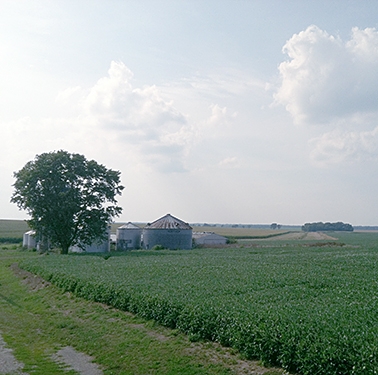
On behalf of a private U.S. agricultural technology provider, WPI’s team generated an econometric model to forecast the movement of concentrated corn production north and west from the traditional U.S. Corn Belt. WPI’s model has subsequently provided quantitative support to a multi-million-dollar investment into short-season corn variety development. WPI’s methodology included a series of interviews with regional grain elevators and seed consultants. Emphasizing outreach and communication with stakeholders who possess intimate sectoral knowledge – on-the-ground insights – is a regular component of WPI’s methodologies, made possible by WPI’s ever-growing network of industry contacts.