
Transatlantic Not Dead President Trump avowed to help Maine’s lobster fishermen who confront high tariffs in China and Europe, in part due to his own trade war efforts. He threatened tariffs on Europe auto exports, and he offered financial assistance to the lobstermen, in addition to expanding their fishing area. But in the end, it was standard quid pro quo trade negotiations that will lift the EU’s barrier to American lobster. To help the lobstermen, the U.S. will have to lift its duties on European products like prepared meals, crystal glassware, surface preparations, propellant powers, cigarette lighters and lighter parts. Surprisingly not on the list is Spanish olives, which had to be high on Brussels’ ask list. ...



 content here...

 testing content here...

 A pika (/ˈpaɪkə, ˈpiːkə/ PY-kə, PEE-kə[3][4]) is a small, mountain-dwelling mammal native to Asia and North America. With short limbs, a very round body, an even coat of fur, and no external tail, they resemble their close relative the rabbit, but with short, rounded ears.[5] The large-eared pi...

From WPI Consulting
Infrastructure investment due diligence
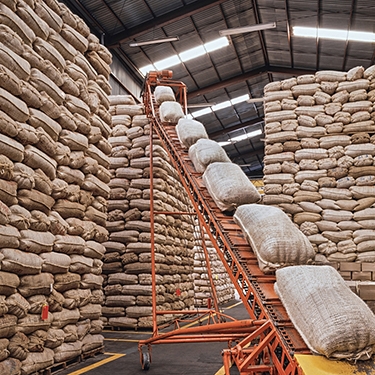
On behalf of a Canadian oilseed processer WPI's team provided market analysis, econometric modeling and financial due diligence in support of a $24 million-dollar investment in a Ukrainian crush plant. Consistent with WPI's findings, local production to supply the plant and the facility's output have expanded exponentially since the investment. WPI has conducted parallel work on behalf of U.S., South American and European clients, both private and public, in the agri-food space.