Trouble Before the War Ohio State University Professor Ian Sheldon laments that even if the U.S. and China reach a trade agreement, it will take many years to undo the damage from the trade war. He is correct, but it is also true that China was doing American agriculture fewer favors before the trade war. U.S. sales of both bulk commodities and intermediately-processed foods were on a declining trend prior to its beginning. Sales of consumer-ready products were trending up but constituted the smallest portion of U.S. agricultural exports to the Middle Kingdom (see graph below). China is not interested in economic optimization via comparative advantage in agriculture. Separately, Chinese President Xi Jinping is reportedly pushing a party r...



 testing content here...

 A pika (/ˈpaɪkə, ˈpiːkə/ PY-kə, PEE-kə[3][4]) is a small, mountain-dwelling mammal native to Asia and North America. With short limbs, a very round body, an even coat of fur, and no external tail, they resemble their close relative the rabbit, but with short, rounded ears.[5] The large-eared pi...


 Lobelia (/loʊˈbiːliə, lə-/[4][5][6]) is a genus of flowering plants in the family Campanulaceae comprising 415 species,[7] with a subcosmopolitan distribution primarily in tropical to warm temperate regions of the world, a few species extending into cooler temperate regions.[8] They are known g...

From WPI Consulting
Forecasting developments in production agriculture
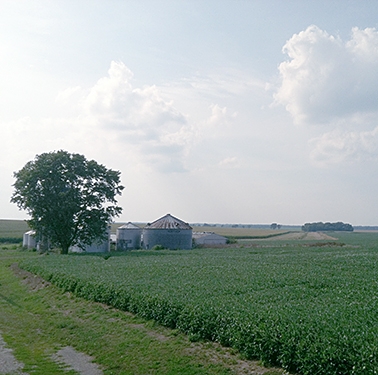
On behalf of a private U.S. agricultural technology provider, WPI’s team generated an econometric model to forecast the movement of concentrated corn production north and west from the traditional U.S. Corn Belt. WPI’s model has subsequently provided quantitative support to a multi-million-dollar investment into short-season corn variety development. WPI’s methodology included a series of interviews with regional grain elevators and seed consultants. Emphasizing outreach and communication with stakeholders who possess intimate sectoral knowledge – on-the-ground insights – is a regular component of WPI’s methodologies, made possible by WPI’s ever-growing network of industry contacts.