
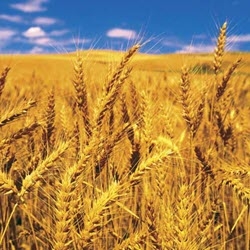
During this winter wheat planting period in the U.S., it is important to note that the area planted to wheat has declined in recent years. This is due in part to the greater profitability of corn and soybeans, as well as the favorable genetic changes in the latter two crops and climate change. Weather can affect the planting of wheat as well as the number of acres ultimately harvested, but generally there is a strong correlation between the two. The wheat planted to harvested ratio over the past decade has been consistently in the low to mid 80 percentile, with an overall average of 83.6 percent. Without distinguishing amongst the six different major types of wheat grown in the U.S., the fact is that there is land solely suitable to...


 testing content here...

 A pika (/ˈpaɪkə, ˈpiːkə/ PY-kə, PEE-kə[3][4]) is a small, mountain-dwelling mammal native to Asia and North America. With short limbs, a very round body, an even coat of fur, and no external tail, they resemble their close relative the rabbit, but with short, rounded ears.[5] The large-eared pi...

 Kolkwitzia amabilis /kɒlˈkwɪtsiə əˈmæbɪlɪs/,[2] commonly known as beauty bush, is a species of flowering plant in the family Caprifoliaceae. It is the sole species in genus Kolkwitzia.[1] It is a deciduous shrub grown as an ornamental plant. In China, where it originated, the plant is cal...

 Lobelia (/loʊˈbiːliə, lə-/[4][5][6]) is a genus of flowering plants in the family Campanulaceae comprising 415 species,[7] with a subcosmopolitan distribution primarily in tropical to warm temperate regions of the world, a few species extending into cooler temperate regions.[8] They are known g...

From WPI Consulting
Infrastructure investment due diligence
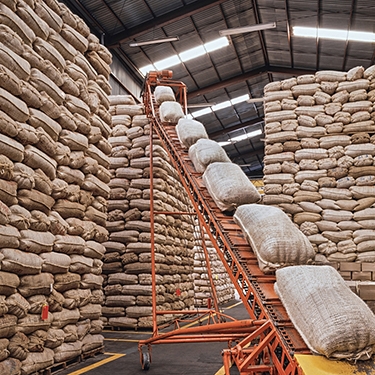
On behalf of a Canadian oilseed processer WPI's team provided market analysis, econometric modeling and financial due diligence in support of a $24 million-dollar investment in a Ukrainian crush plant. Consistent with WPI's findings, local production to supply the plant and the facility's output have expanded exponentially since the investment. WPI has conducted parallel work on behalf of U.S., South American and European clients, both private and public, in the agri-food space.