
Summary of USDA’s December 2019 Soybean Estimates: Soybean supply and use projections for 2019/20 are unchanged from last month. The U.S. season-average soybean price for 2019/20 is forecast at $8.85 per bushel, down 15 cents. Global 2019/20 oilseed production is forecast up 3.3 million tons to 574.6 million, with greater soybean, sunflowerseed, and peanut production partly offset with lower rapeseed and cottonseed forecasts. China’s soybean production is projected up 1.0 million tons to 18.1 million reflecting higher area and yield reported by the National Bureau of Statistics...



 content here...
 Fabiana is a genus of flowering plants in the nightshade family, native to dry slopes in western South America.[1] They are evergreen shrubs or subshrubs,[1] with needle-like leaves and profuse tiny tubular flowers in summer. The common name is false heath because the leaves superficially resem...

 testing content here...

From WPI Consulting
Infrastructure investment due diligence
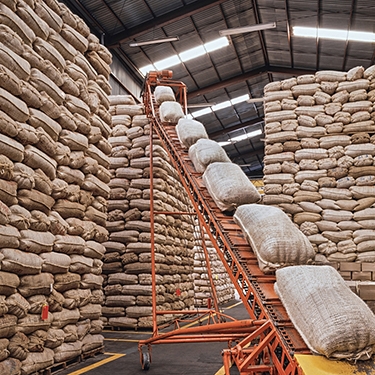
On behalf of a Canadian oilseed processer WPI's team provided market analysis, econometric modeling and financial due diligence in support of a $24 million-dollar investment in a Ukrainian crush plant. Consistent with WPI's findings, local production to supply the plant and the facility's output have expanded exponentially since the investment. WPI has conducted parallel work on behalf of U.S., South American and European clients, both private and public, in the agri-food space.