
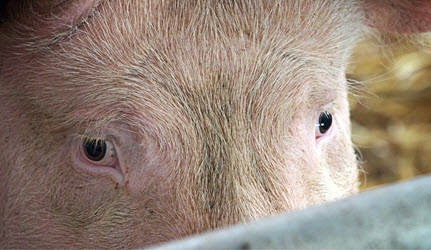
The Wall Street Journal noted that China’s pork production fell 55 percent last year (per Rabobank) and yet U.S. pork prices have fallen as China instead bought pork from Europe and Brazil. But global pork supplies are finite, with neither Europe nor Brazil indicating the presence of surplus carryover stocks for the past few years. The data is anomalous. Over the past two years, global pork production fell by 17.7 MMT while trade only grew by 1.9 MMT, and surplus stocks increased by 7.4 percent. China had its own trade tiff going with Canada, which saw surplus pork stocks grow by 23 percent, whereas U.S. carryover increased by 12.5 percent. So, where did the extra pork to feed China come from? China produces half the world’s po...



 content here...
 The magpie goose (Anseranas semipalmata) is the sole living representative species of the family Anseranatidae. This waterbird is found in northern Australia and southern New Guinea.[2] The species is not truly migratory but it sometimes travels large distances to find food and water, especiall...
 The common ostrich (Struthio camelus), or simply ostrich, is a species of flightless bird native to certain areas of Africa (and historically, Arabia) and is the largest living species of bird. The common ostrich is one of two extant species of ostriches, the only living members of the genus St...

From WPI Consulting
Forecasting developments in production agriculture

On behalf of a private U.S. agricultural technology provider, WPI’s team generated an econometric model to forecast the movement of concentrated corn production north and west from the traditional U.S. Corn Belt. WPI’s model has subsequently provided quantitative support to a multi-million-dollar investment into short-season corn variety development. WPI’s methodology included a series of interviews with regional grain elevators and seed consultants. Emphasizing outreach and communication with stakeholders who possess intimate sectoral knowledge – on-the-ground insights – is a regular component of WPI’s methodologies, made possible by WPI’s ever-growing network of industry contacts.